
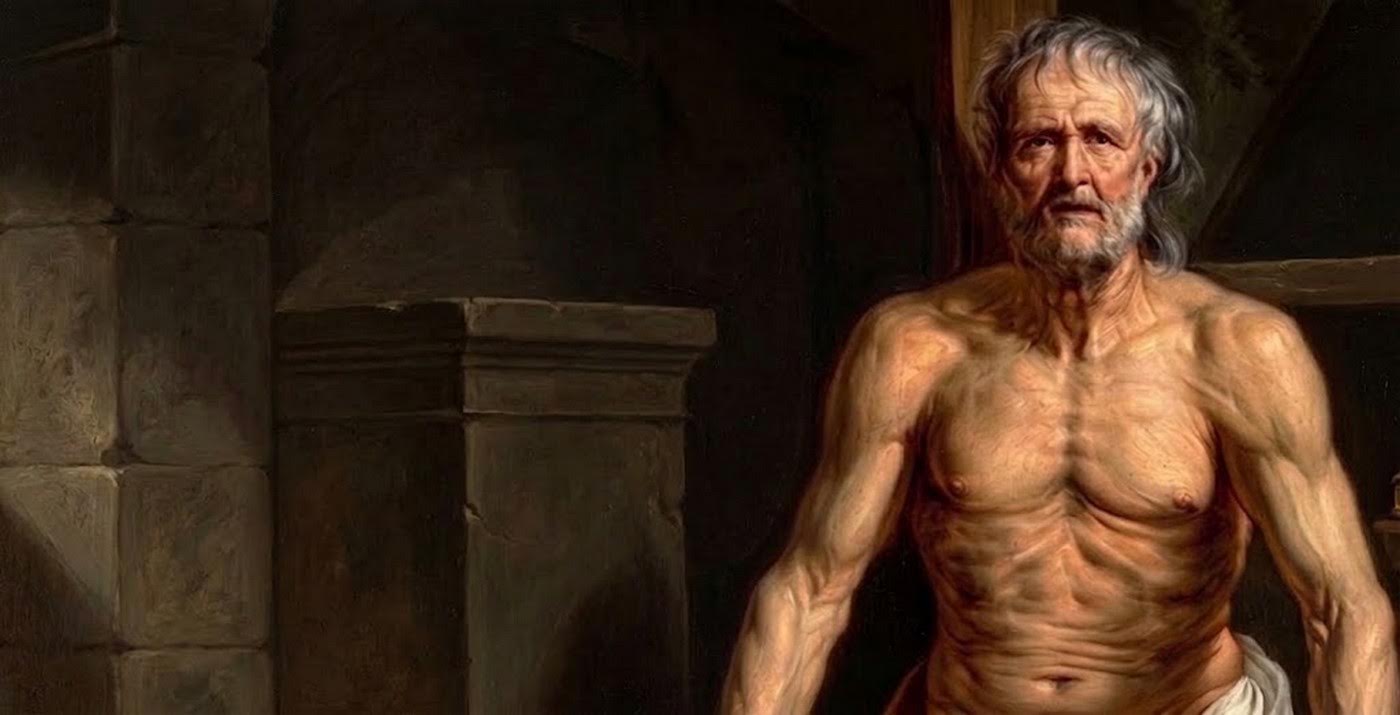
Far from being like a hunter-gatherer and possibly far from knowing about the existence of hunter-gatherer people, Seneca nonetheless invites to give up all the hedonistic life that inevitably accompanies the rise of any empire. In his letters he invites for a more modest life driven by self-examination and a living according to nature. But above all he invites not to be afraid of death, something his contemporaries in all their strives for immortality were afraid of and something that later on Christianity became so obsessed about.
If he is not a Diogenes, contenting himself with the sun alone and cynically scorning power, Seneca complies to the stoic doctrine which promotes a Zeno kind of republic, not run by an educated elite but by communities of people who are equal in their kind but are all committed to an examination of their own human nature. In this sense then it is not too far fetched to think of these people as a modern version of hunter-gatherers, aware of themselves, for instance their dreams, and their immediate surroundings, something modern humans in pursuing the algorithm imposed on them by the centralized powers of their little empires are not.